


Fall Lawn Care Tips: Prepare for Holiday Lighting
Table of Contents
Why Fall Lawn Care Matters for Holiday Lighting
Soil Preparation and Aeration for a Healthy Foundation
Core Aeration Basics
Adding Compost and Enriching Soil
Overseeding and Seed Selection for Dense Coverage
Match the Timing to Your Grass and First Frost
Cool-Season Versus Warm-Season Lawns
Seed-to-Soil Contact and Coverage Rates
Watering and Early Care After Seeding
Fall Lawn Fertilization Schedule and Timing
Mowing, Watering, and Weed Control in Fall
Mowing Height and Frequency
Watering Newly Seeded Lawns
Managing Weeds and Disease
Best Time for Holiday Lighting Installation and Landscape Prep
Preparing Landscape for Outdoor Lighting Displays
Month-by-Month Fall Lawn Care Checklist
Step 1: Find Your Two Anchor Dates
Step 2: The Checklist
Step 3: Adjust for Your Region
Step 4: Adjust for Weather
Frequently Asked Questions
Last Updated: October 7, 2026
Why Fall Lawn Care Matters for Holiday Lighting
A lush, vibrant lawn transforms your home's curb appeal when the holidays arrive. Fall lawn care tips aren't just about green grass, they create the foundation for your holiday lighting display. A well-maintained landscape makes festive outdoor lighting shine brighter.
Fall is when your lawn either thrives or struggles heading into winter. Cooler temperatures and seasonal moisture create ideal conditions for grass growth and soil recovery.
Most homeowners wait until spring to address lawn problems, a missed opportunity. Fall is when soil recovers from summer stress, grass establishes deep roots, and your landscape gains the density and color that photographs beautifully under holiday lights.
Soil Preparation and Aeration for a Healthy Foundation
Healthy soil is the foundation of a healthy lawn, and fall is the ideal time to address compaction. Core aeration breaks up compacted soil so water, nutrients, and oxygen reach grass roots more effectively, especially important if your lawn sees heavy foot traffic or you plan to showcase it with professional holiday lighting.
Core Aeration Basics
Core aeration removes small plugs of soil and thatch, creating space for root development. It typically happens in early to mid-fall when soil moisture is adequate but temperatures are cooling. The soil cores left on the surface break down naturally and return nutrients to your lawn.
Aeration matters most for lawns showing compaction: water pooling on the surface, thin turf, or areas where grass struggles. After aeration, your lawn absorbs water and nutrients more efficiently, producing denser growth and better color, exactly what you want visible when holiday lighting installation happens.
Adding Compost and Enriching Soil
Compost improves soil structure, water retention, and nutrient availability. Spreading a half-to-one-inch layer over your aerated lawn in fall feeds the soil as it breaks down over winter, giving your lawn the dense, healthy appearance that serves as a canvas for custom Christmas lighting designs.
Overseeding and Seed Selection for Dense Coverage
Overseeding fills thin or bare spots and thickens turf before winter, but the window and seed choice depend on your grass type and first frost date. Getting this wrong is the most common reason fall seeding fails.
The Lawn Care Nut
Match the Timing to Your Grass and First Frost
Finish overseeding at least 45 days before your average first frost so seedlings can tiller and harden off. That pushes the window to late August-early September in the North, September-early October in the mid-Atlantic and transition zone, and October in the South, where frost may not arrive until November.
Seed too late and germination stalls below roughly 55°F, leaving tender seedlings without enough root mass to survive winter. Seed too early and young grass competes with weeds and can dry out before it establishes.
Cool-Season Versus Warm-Season Lawns
Cool-season lawns, tall fescue, fine fescue, perennial ryegrass, and Kentucky bluegrass, are the classic overseeding candidates. They germinate best in the 60s and 70s, and fall gives them two cool growing seasons before summer stress.
Warm-season lawns, bermuda, zoysia, centipede, and St. Augustine, are still growing in early fall and go dormant as temperatures drop. Overseeding with a cool-season grass is a deliberate choice to keep winter color, but it competes with the warm-season grass in spring. Many homeowners in these regions skip overseeding and focus on fertilization and weed control; St. Augustine is usually propagated by sod or plugs, so seeding it is rarely productive.
Seed-to-Soil Contact and Coverage Rates
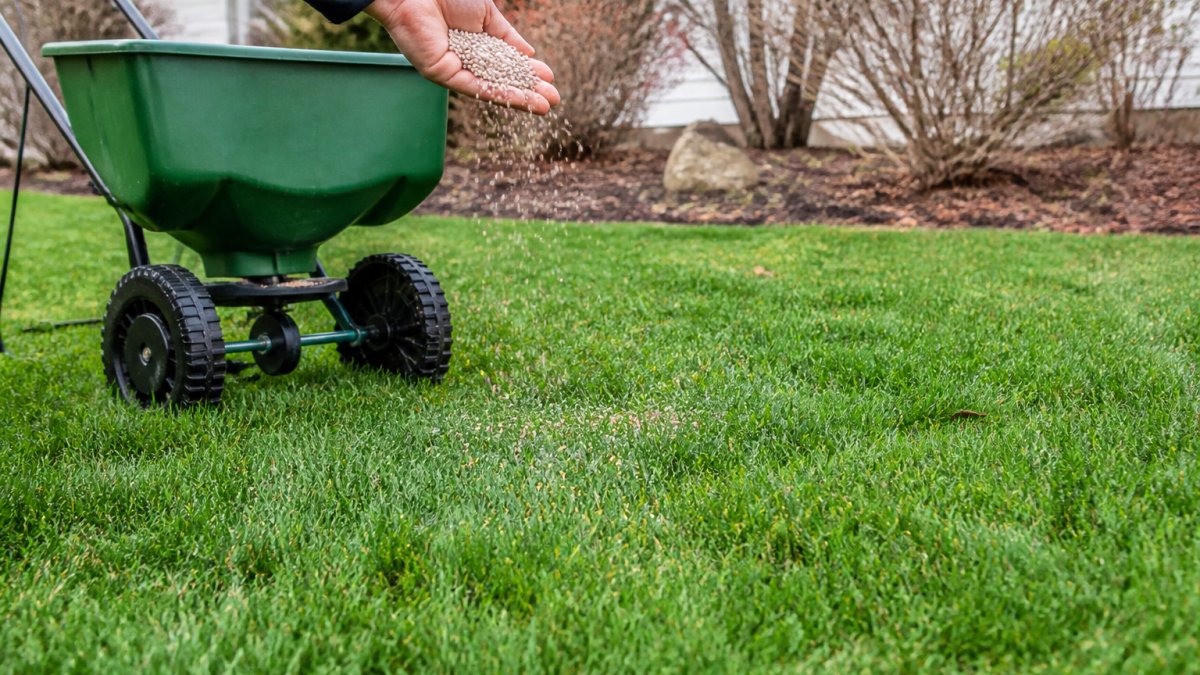
Seed sitting on thatch or matted grass won't germinate well, the goal is seed-to-soil contact. Core aeration right before seeding opens channels that catch seed and give roots a path down, and a light compost topdressing or rake pass to work seed into the top quarter-inch dramatically improves establishment.
Coverage rates are printed on every seed bag and vary by species and whether you're starting fresh or overseeding; overseeding generally calls for about half the new-lawn rate. Measure your lawn area (length times width per zone, then add them up) and match it to the bag.
Watering and Early Care After Seeding
Newly seeded areas need consistent surface moisture, not soaking. Light, frequent watering, once or twice a day for two to three weeks, keeps the top inch damp until germination. Once grass reaches mowing height, switch to deeper, less frequent watering. Keep foot traffic off seeded zones and hold off on pre-emergent weed control there, since it can prevent new grass from germinating.
A dense, evenly established lawn gives holiday lighting a smooth, uniform surface to reflect against, so light strings and fixtures read as crisp lines instead of patchy highlights.
Fall Lawn Fertilization Schedule and Timing
Fall fertilization supports root development and prepares grass for dormancy. A feeding in October or early November strengthens winter hardiness and promotes vigorous spring growth.
Nitrogen-rich fertilizers support leafy growth, while phosphorus and potassium encourage root development. Fall applications often emphasize potassium and phosphorus to build root reserves, creating turf density and color that look exceptional under professional holiday lighting displays.
Many professionals recommend a second November application using slow-release fertilizer, providing steady nutrients as soil cools without stimulating new blade growth that winter weather might damage.
Mowing, Watering, and Weed Control in Fall
Ongoing mowing, watering, and weed management keep your landscape polished as holiday lighting installation approaches.
Mowing Height and Frequency
Mowing height affects lawn health and appearance. In fall, keep it slightly higher than summer, typically 2.5 to 3.5 inches for cool-season grasses. Taller grass shades soil, reducing moisture loss and suppressing weeds, and appears denser and more vibrant under your custom Christmas lighting designs.
Mow often enough to remove no more than one-third of the blade per cutting, the "one-third rule" prevents stress and keeps a neat appearance. As growth slows, mowing frequency drops. Keep blades sharp; dull blades tear grass, creating brown edges that invite disease.
Watering Newly Seeded Lawns
Newly seeded areas need consistent moisture. Water lightly and frequently (once or twice daily) for two to three weeks, then reduce frequency and increase depth to encourage stronger roots.
Fall rainfall is often adequate, but dry spells require supplemental watering. Overwatering promotes disease, so water early morning and adjust for rainfall. By November, most established lawns need little extra water as growth slows.
Managing Weeds and Disease
Fall is an excellent time to address weeds. Cool-season annual weeds germinate in fall and early spring, so fall control prevents next year's problems. Broadleaf weeds are easier to control in fall when plants move nutrients downward to roots, spot-treat with herbicide or remove by hand.
Disease pressure rises in fall due to moisture and cool temperatures. Proper aeration, avoiding overwatering, and adequate mowing height reduce risk. Address any disease promptly, fungal issues that start in fall can damage turf through winter.
Best Time for Holiday Lighting Installation and Landscape Prep
Holiday lighting installation typically begins in late October or early November, depending on your region and design complexity. Coordinating fall lawn care tips with your installation timeline ensures your lawn looks its best when the lights go up.
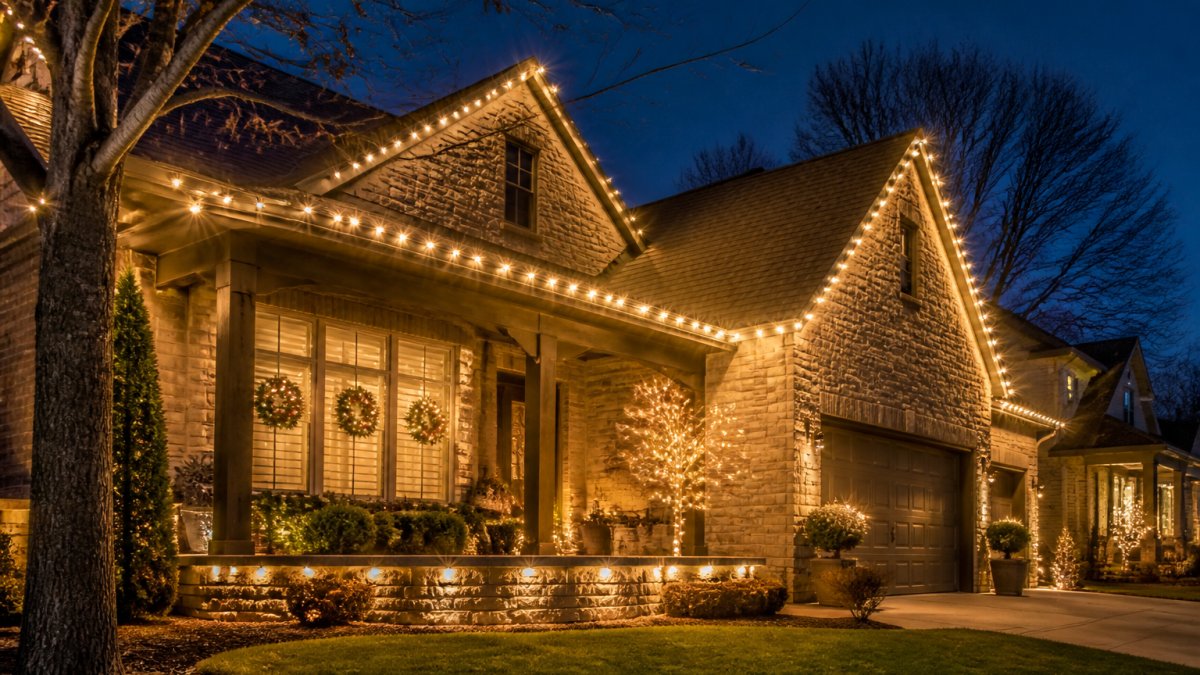
Professional holiday lighting installation requires clear access, well-maintained shrubs and trees, and a healthy lawn free of bare spots or disease. Complete fall lawn care first and your landscape presents as a polished, unified space ready to dazzle.
Pro Tip Schedule your fall lawn care and holiday lighting installation together. A freshly aerated, overseeded lawn with rich color creates the perfect backdrop for professional Christmas lighting designs.
Preparing Landscape for Outdoor Lighting Displays
Your landscape design directly impacts how holiday lighting looks and performs. Before installation, trim shrubs and trees to clear sight lines and keep branches from obscuring lights.
Clear landscape beds of debris and dead plants, a clean bed frames your holiday lighting beautifully. Consider sight lines from the street, driveway, and main windows, where your display will be most visible.

Healthy grass and well-maintained beds create visual contrast that makes your holiday lighting installation stand out.
Key Takeaway Professional holiday lighting installation is most effective when your landscape is prepared first. A healthy, dense lawn and well-maintained planting beds create the foundation that makes custom Christmas lighting designs truly shine.
Month-by-Month Fall Lawn Care Checklist
Most fall lawn care calendars assume one climate. This one is built backward from two dates that matter: your average first frost and your holiday lighting installation. Everything else is scheduled around those anchors.
Step 1: Find Your Two Anchor Dates
Look up your average first frost date, then subtract 45 days, that's your latest safe overseeding date. Next, decide when you want holiday lighting installed; most installations land in late October or early November. Work backward from that date for tasks that must finish before lights go up, especially aeration, overseeding, and bed cleanup.
Step 2: The Checklist
Window | Task | Why It Matters for Lighting Season |
Late summer (4-6 weeks before first frost minus 45 days) | Soil test; order seed matched to your grass type | Avoids guessing at fertilizer and seed needs |
Early fall (45+ days before first frost) | Core aerate, overseed, topdress with compost | Opens soil so seed takes; smooths the surface lights will sit above |
2-4 weeks after seeding | Light, frequent watering; first mow once grass reaches height | Even germination means no patchy shadows under lights |
Mid-fall | Fall fertilization focused on root development | Builds density and color that hold through the display season |
Mid-fall | Weed control and disease check | Prevents bare spots and fungus from marring the display |
2-3 weeks before installation | Trim shrubs, clear beds, edge walkways | Clears sight lines and mounting points for fixtures |
Installation window | Holiday lighting installation | Lawn is at peak appearance when lights go up |
Late fall | Final slow-release fertilization; winterize irrigation | Sets up spring green-up after the display comes down |
Step 3: Adjust for Your Region
In colder zones, compress early-fall tasks and prioritize aeration and overseeding before the 45-day cutoff. In warmer zones, push overseeding into October and lean on fertilization and weed control. Coastal and humid regions should watch disease pressure in mid-fall, since lingering moisture and mild temperatures favor fungus.
Step 4: Adjust for Weather
A dry fall means supplemental watering for new seed; a wet fall means backing off irrigation and watching for disease. If an early cold snap is forecast, fertilize earlier and skip late seeding that won't establish. The checklist is a framework, the anchors (first frost and installation date) stay fixed while tasks flex around them.
Pro Tip Mark your first-frost date and your lighting installation date on the same calendar. Every other fall task slots between them, so you always know whether you are ahead or behind.
Built this way, your lawn reaches peak density and color exactly when the lights go up, and the display looks intentional rather than improvised.
Frequently Asked Questions
What is the best thing to put on your lawn in the fall?
Fall fertilizer is essential for fall lawn care tips. Look for a fertilizer with higher nitrogen and potassium to support root development and prepare your turf for winter dormancy. Apply it in early fall when soil temperatures are still warm enough for nutrient uptake. This feeding strengthens your lawn before the cold months and promotes vigorous spring growth.
What month should I put down fall fertilizer according to a fall lawn fertilization schedule?
Apply your first fall fertilizer application in late August or early September when soil temperatures are still above 65°F. A second application in October or early November, about 6-8 weeks later, prepares your lawn for winter. Timing varies by region, so watch soil temperature rather than the calendar. Cool-season grasses respond best to fall feeding, while warm-season lawns need less fall fertilization.
When is the best time for holiday lighting installation if I'm doing fall lawn care?
The best time for holiday lighting installation is late October through early November, after your fall lawn care work is complete but before heavy frost. This timing lets your newly seeded areas establish before installation crews work on your property. Completing lawn renovation first ensures your landscape looks lush and pristine when lights go up, creating the perfect backdrop for festive displays.
How does preparing my landscape for outdoor lighting improve my overall lawn health?
Preparing landscape for outdoor lighting involves clearing debris, trimming shrubs, and ensuring good sight lines, which naturally supports lawn health. Removing thatch and leaves improves air circulation and reduces disease risk. A well-maintained landscape with healthy soil and dense turf provides a stable foundation for light installation and shows off your holiday display while keeping your yard looking vibrant all season.
Book Today
Comments